
Wade Freeman
Kimberley Project Officer
Australian Conservation Foundation
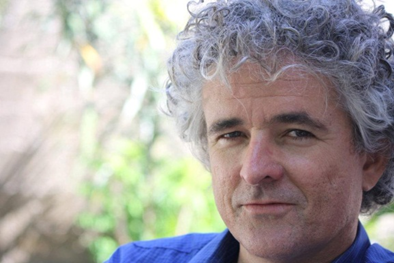
Wade Freeman has undertaken a long and remarkable journey that led him back home to Broome on the North Coast of Western Australia, where he works as the Kimberley Project Organiser for the Australian Conservation Foundation.
That journey began for Wade growing up in Papua New Guinea till the mid 1970’s.
When back in Western Australia, and out of school, he started bushwalking, rock climbing and canoeing, first exploring the South West old growth forests and then the Kimberley.
“I was a pretty meek and mild character in my youth,” he says. “But when I saw what was happening to those forests I was called to come out of my shell and become more rebellious in there defense,” says Wade. These first forays into conservation work focused in Western Australia in regions including the Giblet Forest, then the Hawke, Lockhardt, Rocky and several places.
“I’ve had the best opportunities to be dropped into the remotest regions of the Kimberley by helicopter (usually in the Wet season) and spend weeks walking out or waiting to be helicoptered out. I also had the honor of rafting the mighty Fitzroy River in full flood, with local Bunuba People, to draw attention to past ridicules proposals to dam the Fitzroy and even pipe the water to Perth”.
It was then his deep affinity with the Kimberley region was firmly established, and the desire to protect Australia’s most precious places grew.
Wade has always been drawn to working remote places on projects that fall under the radar of mainstream attention. Early in his career he was involved in working to protect the ancient forests of the South West and then the rainforests of Malaysia and Indonesian, and more recently worked with the Kimberley Land Council in a place in the Tanami Desert called Paraku Indigenous Protected Area.
It was there that he met his wife Gillian Kennedy. “Gillian had just come back from spending a year as an Australian youth ambassador in Bangladesh,” recalls Wade. “We met out in Tanami Desert and several years later we were married.”
The pair spent three years living and working in the Mulan Aboriginal Community on the edge of Lake Gregory in the southern Kimberley. “Gillian was also passionate about working with other cultures in far remote regions. We’ve often talked about the fact that it took us so long to meet but where would we expect to meet but in the remotest regions possible!”
Wade and Gillian have been fortunate enough to be able to continue traveling and working together ever since. Before taking on the role as Kimberley Project Officer for ACF, they were living and working for two years in Oecusse, one of the most remote regions of East Timor.
The area is landlocked by West Timor and can only be accessed by a charter flight, UN transport or by taking a rusty old ferry. Wades work in East Timor was as Program Coordinator for a sustainable development, food security, disaster risk reduction and climate change program with a staff of 36 local East Timorese.
The work focused on assisting villagers to make the transition from slash and burn agriculture to more sustainable models, maintaining the topsoil, forests and ground water on which they were dependent.
When the project finished in East Timor, Wade and Gillian decided to move back to Broome – a town where they both had old connections and deep affinity as the gateway to the Kimberley. “It’s an amazing, diverse, multi cultured community and strong place to be – Broome was the only town in Australia to ever be exempt from the White Australia Policy and I think that’s something to be celebrated,” says Wade.
Living in Broome also provided the opportunity to work for the protection of the Kimberley at close range. Wade has a clear vision of the outcomes he’d like to see for the region and feels energized by the challenge of achieving them. “I’d like to see the Kimberley develop its cultural and conservation potentials to the fullest and that inappropriate developments are kept out,” he says.
“I’d like it to develop in its own way where indigenous people can work on their country keeping it and their communities healthy as they have for the past 40 thousand plus years.”
“I’d like the Kimberley to remain an iconic region that gives all Australians a sense of adventure and a sense of the value and wonder of it.”
 rumabambusa